Reformer Pilates is currently one of the most sought-after workouts around – and for good reason. It combines the deep muscle work of classical Pilates with the resistance and support of a specialised piece of equipment: the Reformer. The result? An effective, joint-friendly workout that strengthens your body from the inside out, improves your posture, and – for most people – is genuinely a lot of fun.
What Is the Reformer – and What Makes It So Special?
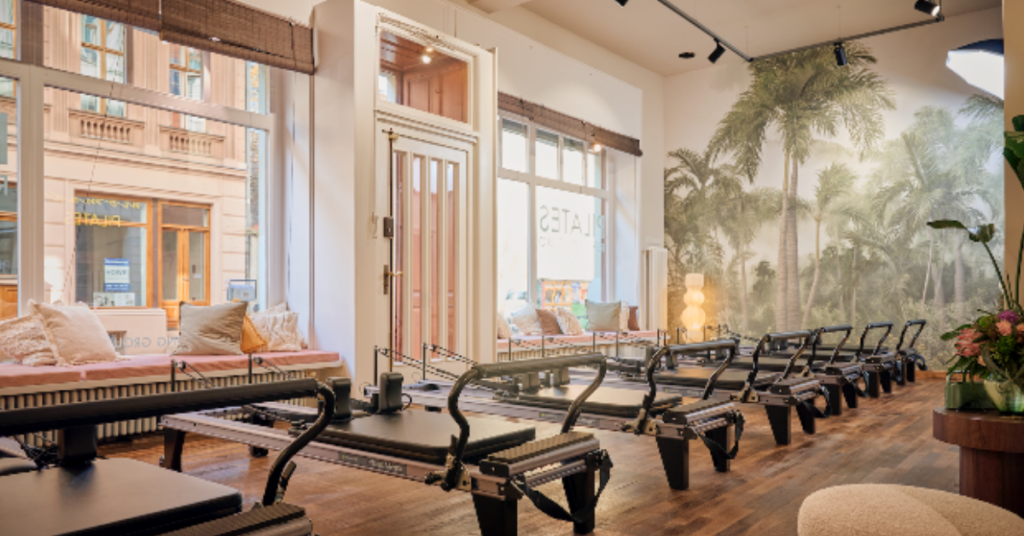
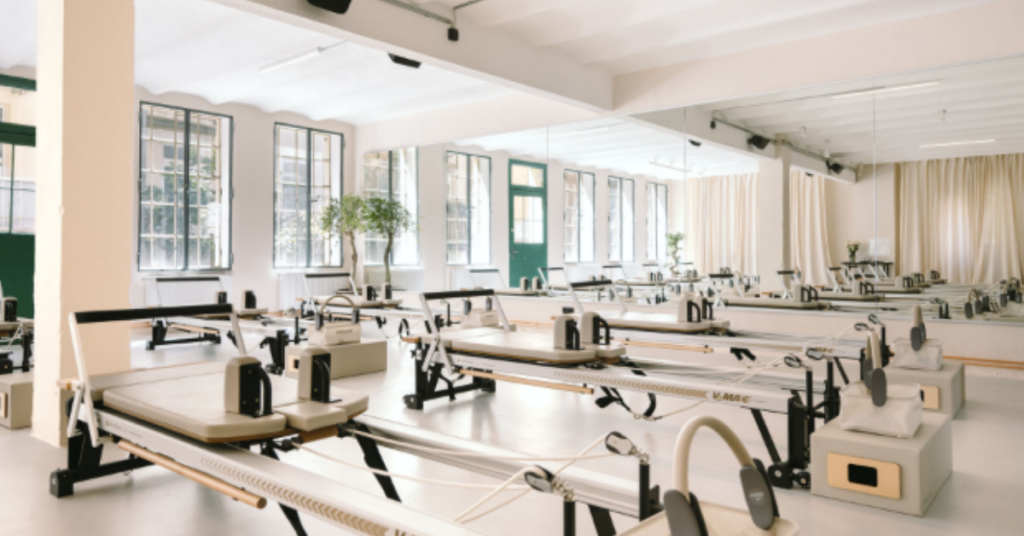
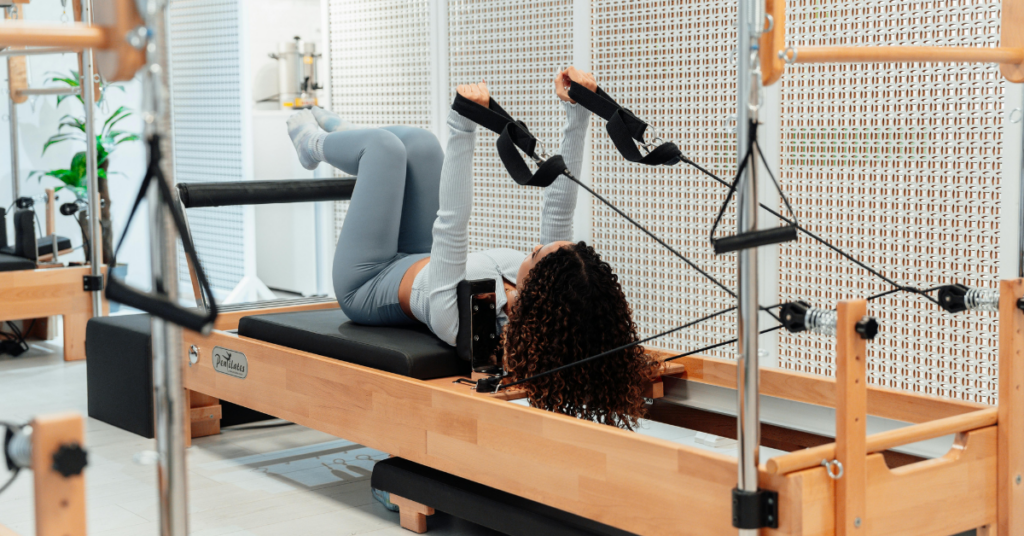
The Pilates Reformer is a piece of training equipment developed by Joseph Pilates in the early 20th century. It consists of a sliding platform (often called the carriage) connected to the frame via springs, along with straps for the arms and legs, a footbar, and adjustable headrests.
What makes the Reformer so unique is that it offers both resistance and support at the same time. The springs can be adjusted depending on the exercise and your fitness level – from very light to very challenging. This means you can target specific muscle groups with precision, while the Reformer simultaneously helps you maintain proper form.
Unlike classic mat Pilates, where you work exclusively with your own bodyweight, the Reformer opens up a much wider range of exercises – in standing, lying, seated, and kneeling positions. That’s exactly what makes Reformer Pilates so effective and varied.
Is Reformer Pilates Suitable for Beginners?
Yes – absolutely. One of the most common myths about Reformer Pilates is that it’s only for advanced practitioners. That’s simply not true. Reformer Pilates is suitable for almost anyone, regardless of age, body type, or fitness background.
Thanks to the spring settings, every exercise can be adapted to your current fitness level. The equipment supports you where you need it – and challenges you where you want to build strength. Whether you’re returning from injury, starting strength training for the first time, or already familiar with Mat Pilates and looking to try something new, the Reformer meets you where you are.

Your First Reformer Pilates Class: What to Expect
Before you book your first class, it helps to know what’s coming. That way, you can arrive relaxed and well-prepared – and focus entirely on your workout.
Class size
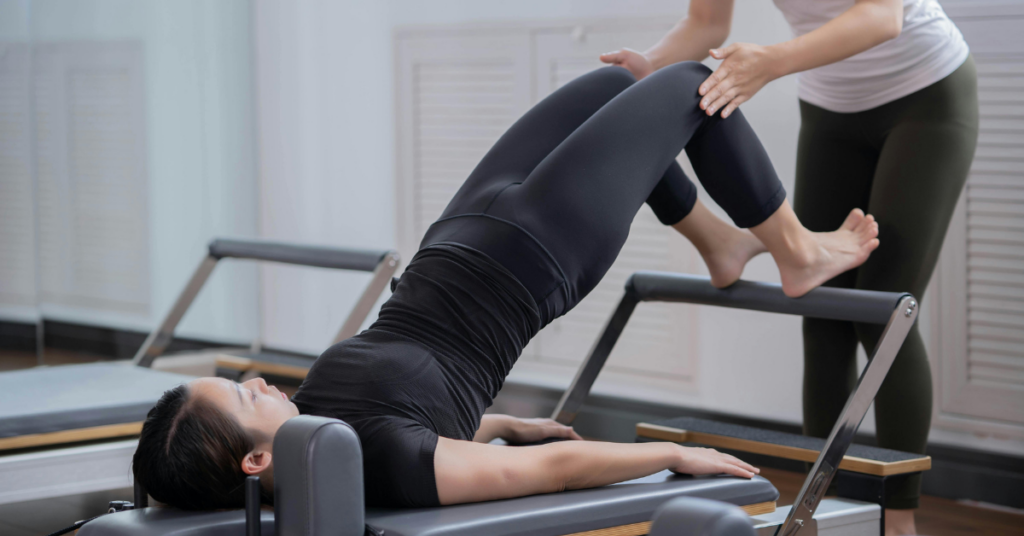
Reformer Pilates is typically taught in small groups, with the number of participants varying by studio and class format. The smaller setting allows instructors to give individual attention, make corrections, and adapt exercises as needed. This is especially valuable when you’re new and still getting to grips with how the equipment works.
Getting to know the equipment
In a good beginner class, you’ll start with a brief introduction to the Reformer – how to adjust the springs, how the carriage works, and what the basic positions are. Take the time to absorb this intro, because it lays the groundwork for everything that follows.
The pace
Reformer Pilates is not a high-intensity cardio workout like indoor cycling or HIIT. Quite the opposite – movements are slow, controlled, and precise, just like in classical mat Pilates. And yet, you may be surprised by how much your body has worked by the end of the class. That’s the magic of this training method: the intensity is in the depth, not the speed.
What to Bring
You don’t need much for Reformer Pilates – just the right kit.
Grip socks: Non-slip socks are required in most studios and can often be purchased on-site. They prevent you from sliding on the smooth carriage surface.
Fitted clothing: Opt for close-fitting tops or sports bras and leggings that won’t ride up when you’re lying down or stretching. Fitted clothing also makes it easier for your instructor to see and correct your alignment.
Water: Even though it’s not a sweaty cardio session, bring a bottle of water and make sure you stay properly hydrated throughout.
| Ready to get started? Get your Urban Sports Club membership and find the right studio near you! |
The Core Principles of Reformer Pilates
Reformer Pilates is built on the same six foundational principles as classical mat Pilates. Understanding these from the start will help you progress much faster:
Centring – activating the powerhouse: All movements originate from your centre – your abdominals, pelvic floor, and lower back. This so-called powerhouse is the source of your strength and should be engaged throughout every exercise.
Focus – quality over quantity: Reformer Pilates requires your full attention. Every movement is performed with intention and conscious connection to the breath. The goal is a small number of repetitions, done well.
Control – no momentum: The carriage should be moved by controlled muscle effort, not by swinging or using momentum. This is the key to making the training truly effective.
Flow – smooth, not sudden: Every movement is performed evenly and fluidly – never jerky. This protects your back and joints, and makes the workout more efficient.
Breathing – the breath leads the movement: In Pilates, you exhale on the effort and inhale on the release. Breathing is an active part of every exercise, not an afterthought.
6 Classic Reformer Pilates Exercises for Beginners
You’ll find these exercises in almost every beginner Reformer Pilates class.
Footwork – the foundation of everything
Footwork is the perfect starting point for getting familiar with the equipment. Lying on the carriage, you place your feet on the footbar and move the carriage through different foot positions – with the springs providing resistance. This exercise activates the thighs, glutes, and calves, and warms up the whole body.
The Hundred – powerhouse activation
You may already know The Hundred from mat Pilates – on the Reformer, this classic exercise takes on a whole new dimension. Lying on the carriage, you lift your head and shoulders slightly and pump your arms rhythmically up and down while breathing deeply into your belly. The springs keep your legs suspended and increase the intensity. The Hundred activates the entire powerhouse right away and is a popular warm-up staple in Pilates.
Leg Circles – hip mobility and control
This exercise uses the Reformer’s straps: you place your feet in the loops and make circular movements with your legs. It improves hip mobility, strengthens the abdominals, and trains stability through the core. For beginners, the circles start small – over time, your range of movement will grow.
Elephant – spinal mobilisation
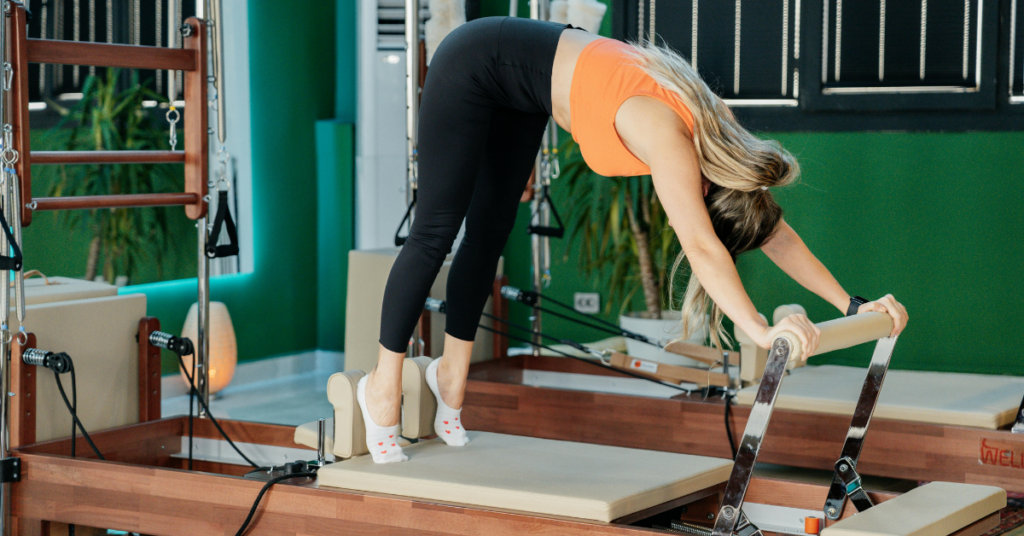
In this exercise, you stand with your feet on the carriage, hinge forward, and place your hands on the footbar. You then slowly push the carriage away and draw it back in – rounding the spine as you go. This mobilises the entire spine, stretches the hamstrings, and strengthens the core. The Elephant works well for beginners because the spring tension makes the movement easy to control.
Short Box Series – core strength and flexibility
For this sequence, you sit upright on a small box placed on the carriage. A series of movements – from sit-ups to lateral rotations to back extensions – challenges your entire core musculature. The Short Box Series is one of the most effective exercise sequences for deep stabilising muscles and features in many Reformer classes.
Mermaid – lateral stretch and breathing
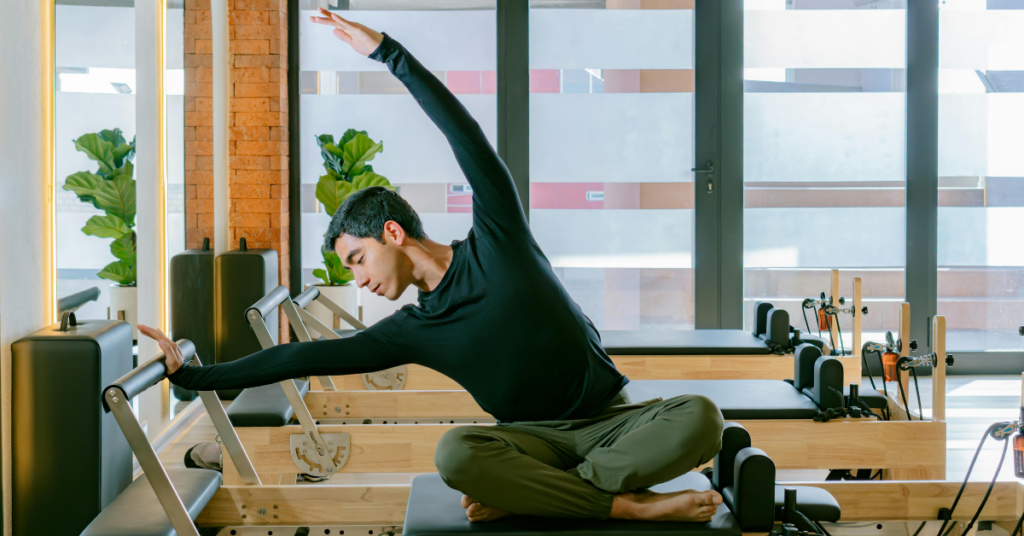
Mermaid is performed sitting sideways on the carriage, alternating side stretches in sync with the breath. It stretches the lateral torso, opens the chest, and improves spinal mobility. This exercise is often used towards the end of a class as a restorative counterbalance to more demanding work.
Reformer Pilates vs. Mat Pilates: Which Is Right for You as a Beginner?
Both forms share the same foundational principles – but there are some notable differences.
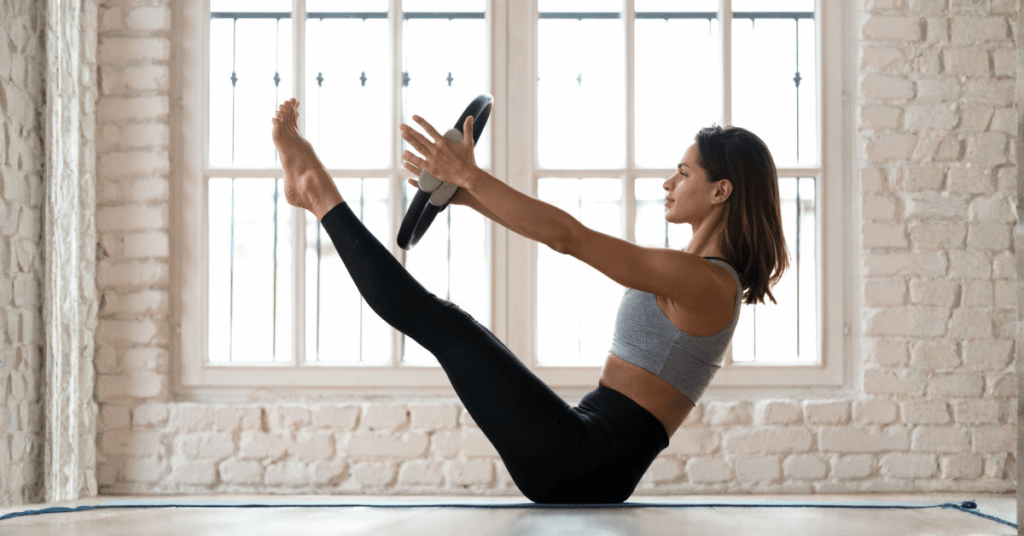
Mat Pilates requires no special equipment, can be done anywhere, and lends itself well to practising independently at home or while travelling. Many people start their Pilates journey on the mat to learn the fundamentals.
Reformer Pilates, thanks to the support of the equipment, enables even more precise muscle activation and a wider variety of exercises. It’s particularly well suited for those looking to see and feel tangible results relatively quickly – though it does require guidance from an experienced instructor, especially in the beginning.
The good news: you don’t have to choose. Many Pilates enthusiasts do both – and with good reason. Mat Pilates sharpens body awareness and reinforces the core principles without equipment, while the Reformer enables more targeted muscle work and greater exercise variety. With Urban Sports Club, you’ll find classes for both formats, giving you a well-rounded, balanced practice.
Reformer Pilates for Beginners – with Urban Sports Club
With a single Urban Sports Club membership, you have access to a wide range of Reformer Pilates studios and classes across Germany and Europe. From specialist boutique Pilates studios to health-focused Pilates spaces – the choice is huge.
Curious which Reformer Pilates studios are near you? Discover popular locations in Berlin, Munich, Cologne, Hamburg, and Frankfurt or browse the Urban Sports Club website to find partner studios in your area.
| Discover the Urban Sports Club memberships now and take the first step towards your workout! |
Have you already tried Reformer Pilates – or are you just getting started? Share your tips for other beginners or your favourite studio in the comments. We’d love to hear from you!
Frequently Asked Questions About Reformer Pilates for Beginners
How is Reformer Pilates different from mat Pilates?
Classical mat Pilates is performed on a mat using only your own bodyweight. Reformer Pilates uses a specialised piece of equipment – the Reformer – with a sliding carriage, springs, and straps. The Reformer provides both resistance and support, enables a wider range of exercises, and allows for more precise muscle work. Both forms are built on the same Pilates principles and complement each other beautifully.
Is Reformer Pilates suitable for complete beginners?
Yes – Reformer Pilates is explicitly designed to work for beginners. The key is to book a dedicated beginner class or introductory session. There, you’ll learn the basics of the equipment, and your instructor will adapt the spring settings and exercises to match your strength, flexibility, and fitness level. Prior experience with mat Pilates is helpful but not necessary.
How often should I do Reformer Pilates when starting out?
For beginners, two sessions per week is a great starting point. This gives your body enough time to recover while still making steady progress. As Joseph Pilates himself put it: after ten sessions you’ll feel the difference, after twenty you’ll see it, and after thirty your body will feel completely transformed. Consistency matters more than intensity.
How much does a Reformer Pilates class cost?
Prices vary from studio to studio. Single sessions typically cost between €25 and €35. With an Urban Sports Club membership, you can access Reformer Pilates classes at hundreds of partner studios across Germany – all included in your monthly membership – making regular training significantly more affordable.
Who is Reformer Pilates especially good for?
Reformer Pilates is particularly well suited for people with back pain or postural issues, those returning from injury (with medical clearance), and athletes looking to specifically strengthen their core. Thanks to the individual spring settings, every exercise can be adapted to suit almost any fitness level.
Can I do Reformer Pilates if I have back pain?
In many cases, yes – Reformer Pilates is even used in rehabilitation and physiotherapy settings, precisely because it targets the deep back and core muscles. Make sure to let your instructor know about any issues before class so they can adjust the exercises accordingly. For acute pain or post-injury recovery, it’s always worth checking in with your doctor first.
What’s the difference between Reformer Pilates and yoga?
Both yoga and Reformer Pilates build flexibility, strength, and body awareness – but through very different approaches. Yoga has spiritual and meditative roots, incorporates breathwork and mindfulness, and is practised using only the body. Reformer Pilates is a modern training method with a clear focus on targeted strengthening of the deep stabilising muscles, supported by equipment. With Urban Sports Club, you can try both and decide what works best for you – or enjoy them alongside each other.