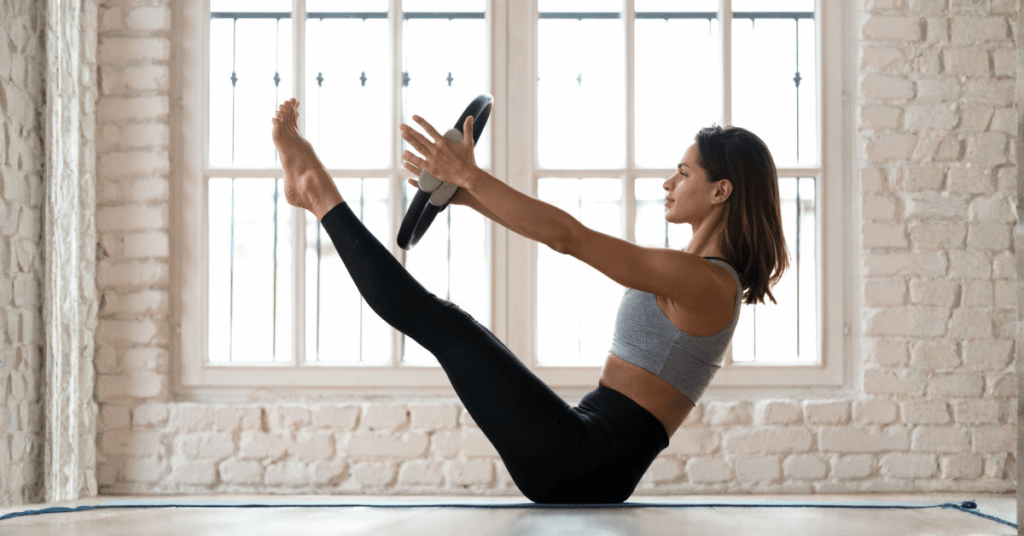
Pilates is ideal if you want to build strength, improve your posture, and bring more body awareness into your everyday life – without putting strain on your joints. But especially at the beginning, many questions arise: Which Pilates exercises for beginners are there, what equipment or accessories do I need, and how do I find the right class for my fitness level? In this article, you will get answers to all these questions.
What Is Pilates Actually – And Why Should You Start With It?
Pilates is a training method developed in the 1920s by Joseph Pilates – originally for the rehabilitation of the injured. The basic principle: targeted, controlled movements that primarily strengthen the deep core muscles (also called the “Powerhouse”). But other muscle groups are also actively targeted in Pilates. Regular Pilates training improves your posture, reduces back pain, and strengthens the deep muscles. Especially if you sit a lot, Pilates is a real game-changer for your body.
Who Is Pilates Suitable For?
Pilates is suitable for everyone – regardless of age, fitness level, or previous knowledge. The Pilates exercises can be very well adapted to individual needs, which is why Pilates is also used in physiotherapy and rehabilitation. Whether you are a sports beginner, have back pain, want to start again after an injury, or want to strengthen your core as an experienced athlete – Pilates has something to offer for everyone.
Mat Pilates or Reformer Pilates – What Is the Difference?
Before you book your first class, it is worth knowing the two most important forms of Pilates:
Mat Pilates
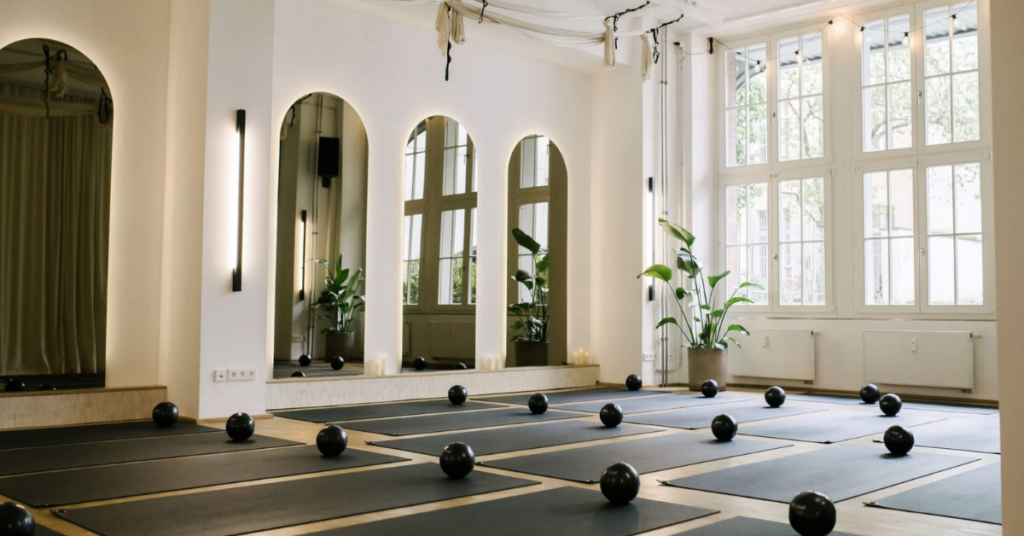
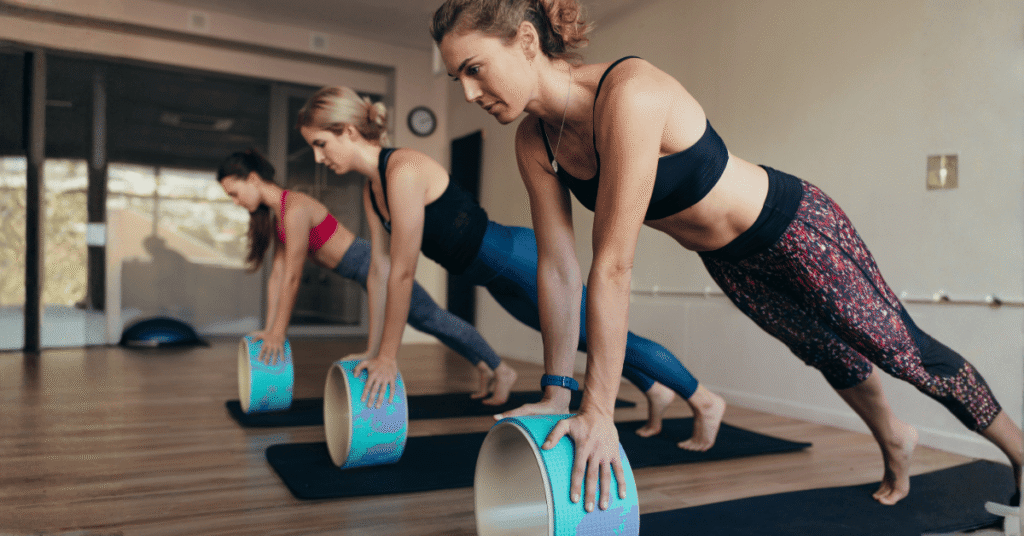
Mat Pilates is the classic, original form of Pilates. All exercises are performed on a mat – without or with small aids such as a Pilates ring, a small ball, or a resistance band. Mat Pilates is the most popular form for beginners: you need little equipment for the exercises, you can also practice it at home, and you will find a variety of suitable classes even for you as a Pilates beginner.
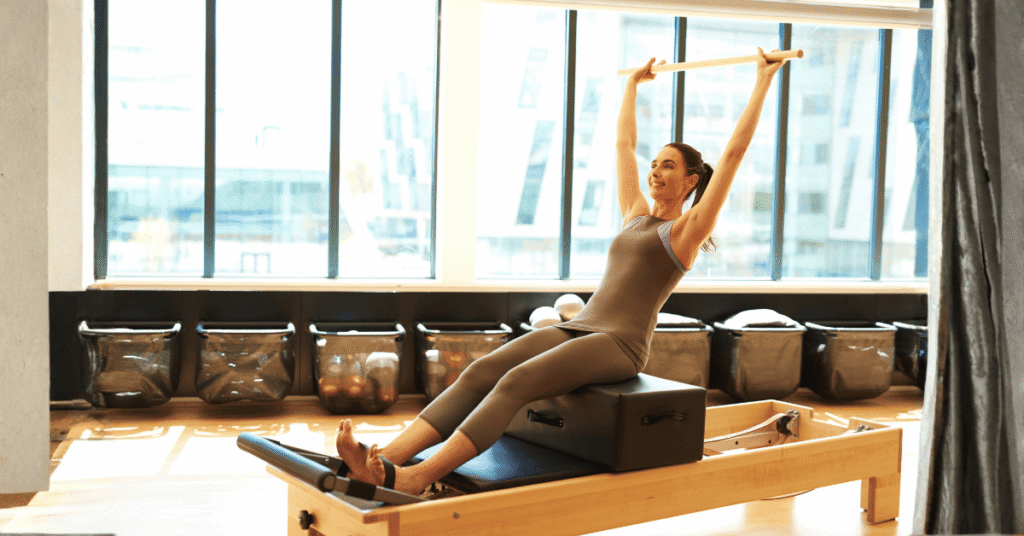
Reformer Pilates
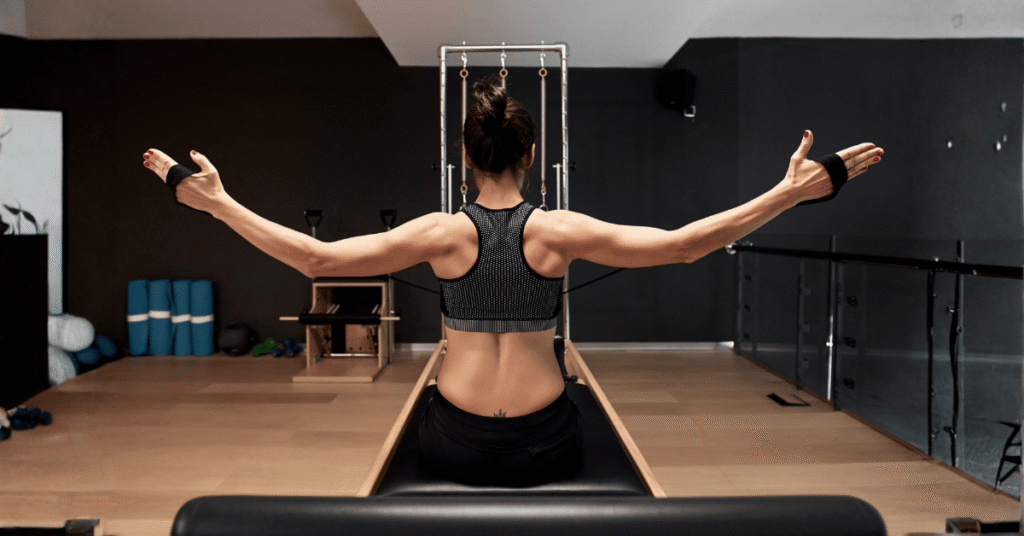
The Reformer is a special Pilates device with a sliding bed, springs, and straps that provides resistance and support at the same time. Reformer Pilates is currently enjoying enormous popularity. It is often more intense than Mat Pilates and allows for even more precise muscle work. Reformer Pilates is also well suited for the beginning; however, an introductory session is recommended first to understand the basic principles of the device.
The 6 Basic Principles of Pilates – What’s Behind the Method
Pilates is more than a collection of exercises and movement sequences. Joseph Pilates based his method on six basic principles that still characterize every Pilates session today. If you understand these, you will train more effectively from the start:
- Concentration: Every movement is performed consciously and with full attention. In Pilates, you should not switch off and go with the flow, but always stay fully concentrated on the task.
- Control: In Pilates, quality over quantity applies. Every exercise is performed slowly, in a controlled manner, and precisely – not with swing or momentum.
- Centering: The powerhouse (abdomen, pelvic floor, and lower back) is the starting point of every movement. So, tighten your core during every exercise to fully utilize the power of your center.
- Flow: In Pilates, movements are performed fluidly and evenly. This protects your joints and makes the training more efficient for your body.
- Precision: Every movement has a clear, intended form. One well-executed repetition is worth more than ten imprecise ones.
- Breathing: The breath is at the center of Pilates and is an active part of every exercise. In Pilates, you exhale during exertion and inhale during relaxation.
8 Pilates Exercises for Beginners – The Foundation for Your Practice
These Pilates exercises for beginners are not only easy to perform – they are also the foundation of every advanced Pilates practice. You will encounter them in almost every class, so it is worth getting to know the exercises in advance.
The Hundred
For this exercise, lie on your back, lift your head and shoulders slightly, and bring your legs to a 45-degree angle. The arms pump rhythmically up and down while you breathe in five times and out five times – a total of 100 pumping movements. The Hundred is the classic warm-up exercise in Pilates and immediately activates the “powerhouse”.
Roll Up
Lie flat on your back, stretch your arms back over your head. Inhale and lift your arms, exhale and roll your spine off the floor vertebra by vertebra until you are sitting upright and your hands are pointing toward your feet. Then slowly roll back down. This exercise strengthens the abdominal muscles and mobilizes the entire spine.
Single Leg Stretch
Lie on your back, lift your head and shoulder blades, and alternately pull one knee to your chest while the other leg is stretched out forward and hovers above the floor. Switch legs in the rhythm of your breath. This exercise strengthens the core, trains coordination, and simultaneously trains the hip flexors and abdomen.
Spine Stretch Forward
For this exercise, sit upright with your legs slightly apart and stretched. Stretch your arms forward and slowly lean forward while exhaling – the spine rounds in the process. Straighten up again while inhaling. The Spine Stretch Forward stretches the back, the back of the thighs, and improves the mobility of the spine.
Bridge
Lie on your back, place your feet hip-width apart, and lift your pelvis upward until shoulders, hips, and knees form a straight line. Hold the position briefly and then slowly roll back down. This exercise strengthens the buttocks, thighs, and deep back muscles – and is particularly beneficial for the body after long periods of sitting. Once you are a bit more advanced, you can stretch one leg into the air while doing this.
Swan
For this exercise, lie on your stomach, place your hands under your shoulders, and slowly push yourself upward while inhaling – the spine stretches, your gaze is directed forward. Lower back down while exhaling. The Swan strengthens the back extensors, opens the chest, and is particularly effective as a balance to desk work.
Side-Lying Leg Lifts
Lie on your side; the body forms a straight line. Lift the upper leg in a controlled manner and lower it again – without tilting the pelvis. This exercise specifically strengthens the lateral hip and gluteal muscles, which are often neglected in everyday life and are significantly responsible for a stable posture. Change sides after a few repetitions.
Child’s Pose
For this exercise, kneel on the mat, sit on your heels, stretch your arms forward, and bring your head to the floor. This resting position is often used in Pilates to relax between demanding Pilates exercises, stretch the back, and regulate breathing. Return to it at any time as soon as your body needs a break.
Pilates Accessories: What Do You Really Need?
To get started with classic Pilates, you need surprisingly little. In most studios, the necessary accessories are available anyway – so you don’t have to invest immediately. Here is an overview:
Mat: For Pilates, mats with a thickness of at least 10 mm are recommended – so that your joints have sufficient padding during the many floor exercises. Those with sensitive knees or joints should choose a mat up to 15 mm.
Pilates Ring (Magic Circle): Optional aid that provides additional resistance when training the inner and outer thighs as well as the arms. Inexpensive and very effective.
Pilates Ball: Used between knees, under the lower back, or between hands to increase the activation of certain muscle groups.
Resistance Band: Elastic bands complement many Pilates exercises with resistance and are inexpensive, space-saving, and very versatile.
Anti-slip socks and tight-fitting clothing: Pilates is performed barefoot or in anti-slip socks. Especially in Reformer Pilates, anti-slip socks are mandatory. Clothing that fits close to the body is an advantage so that the teacher can easily see your posture and execution.

Learning Pilates: Classes in the Studio or Online?
If you want to start Pilates, you are surely asking yourself where you can best do it. There are two options: either in a Pilates studio or a Pilates class in the gym, or with an online class that you can participate in at home or on the go. Both options have their advantages and disadvantages:
Classes in the Pilates Studio
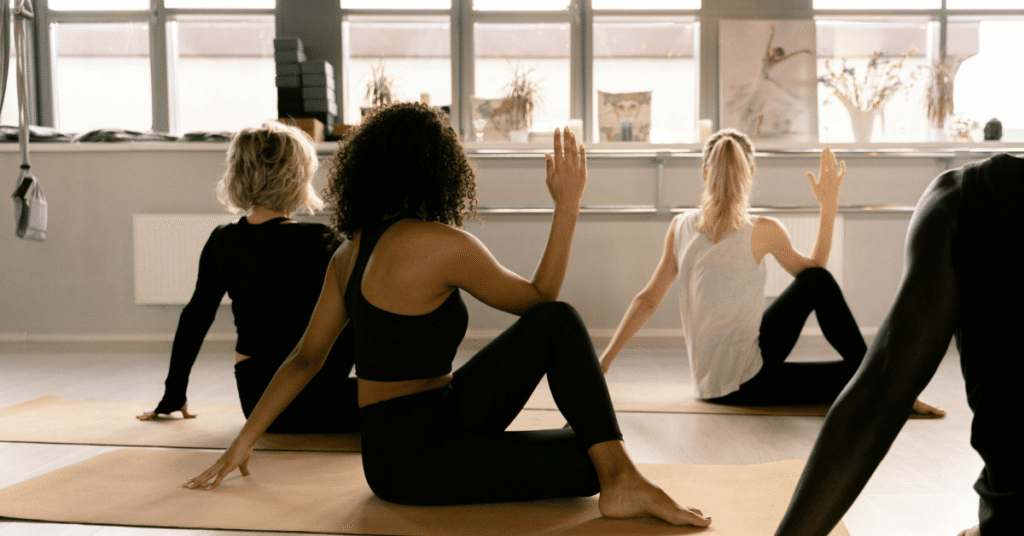
Attending a beginner class in a studio is the most effective method to learn Pilates. A qualified teacher can directly correct the execution, recognize poor posture during the exercises, and offer variations that fit your fitness level. Especially with Pilates, where precise execution is crucial, this makes a big difference. At Urban Sports Club, you will find a variety of suitable Pilates studios near you.
Online Classes and Videos
Through Urban Sports Club, you can also book live online classes or access on-demand videos. YouTube also offers many free Pilates videos for beginners. The advantage of online classes and videos: you are completely flexible in terms of time and place.
The ideal combination for Pilates beginners: Start with a class in the studio to learn the basic principles and Pilates exercises correctly, and supplement your practice at home or on the go with online videos.
Starting Pilates: Your Start Made Easy – With Urban Sports Club
With Urban Sports Club, you have access to hundreds of Pilates studios and classes throughout Germany – from Mat Pilates to Reformer Pilates to specialized back or pregnancy Pilates classes. Whether you prefer to train in a studio with an experienced teacher or dive into your practice online – the selection is huge.
Why are you starting Pilates and what tips do you have to really stick with it? Feel free to tell us about your experience so that other beginners can benefit from it. Have fun on your journey toward a stronger center and holistic well-being.
Frequently Asked Questions About Pilates for Beginners
How often should I do Pilates?
For noticeable progress, 2-3 sessions per week are recommended. Joseph Pilates himself said that after 10 sessions you feel a difference, after 20 sessions you see one, and after 30 sessions you have a completely new body feeling. More important than intensity is regularity – preferably two shorter sessions per week than one very intensive one every two weeks.
Do I have to be fit already to start Pilates?
No – the sport is so popular precisely because it is suitable for every fitness level. The exercises can be made simple or challenging. It is important that you stay with yourself and proceed at your own pace.
What is better for beginners – Mat Pilates or Reformer Pilates?
Both are suitable. However, Mat Pilates is somewhat more recommended for the beginning since you don’t need special equipment and can also practice it at home. Reformer Pilates offers a very effective and joint-friendly form of training through the resistance of the springs – however, an introductory session is recommended for getting started to understand the basic principles on the device.
Can I also learn Pilates at home?
In principle, you can also do the exercises at home, yes – with online classes at Urban Sports Club, YouTube videos, or Pilates apps. However, especially for the beginning, we recommend a few sessions in a studio with a qualified teacher so that you learn the basic exercises correctly and avoid poor posture. With this basis, you can then develop your practice independently.
How long does a Pilates session last?
A typical Pilates session lasts 45 to 60 minutes. There are also shorter formats of 20-30 minutes that can be easily integrated into everyday life – for example, as a morning routine or short lunch break session.
What is the difference between Pilates and Yoga?
Both disciplines improve flexibility, posture, and body awareness – but have different focuses. Pilates focuses more on the targeted strengthening of the deep muscles, especially the core. Yoga has spiritual and meditative roots and incorporates a lot of breathwork and meditation. At Urban Sports Club, you can easily try both and decide for yourself what better meets your needs – or combine both.