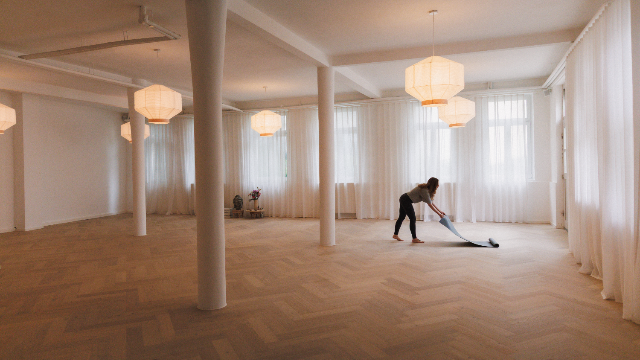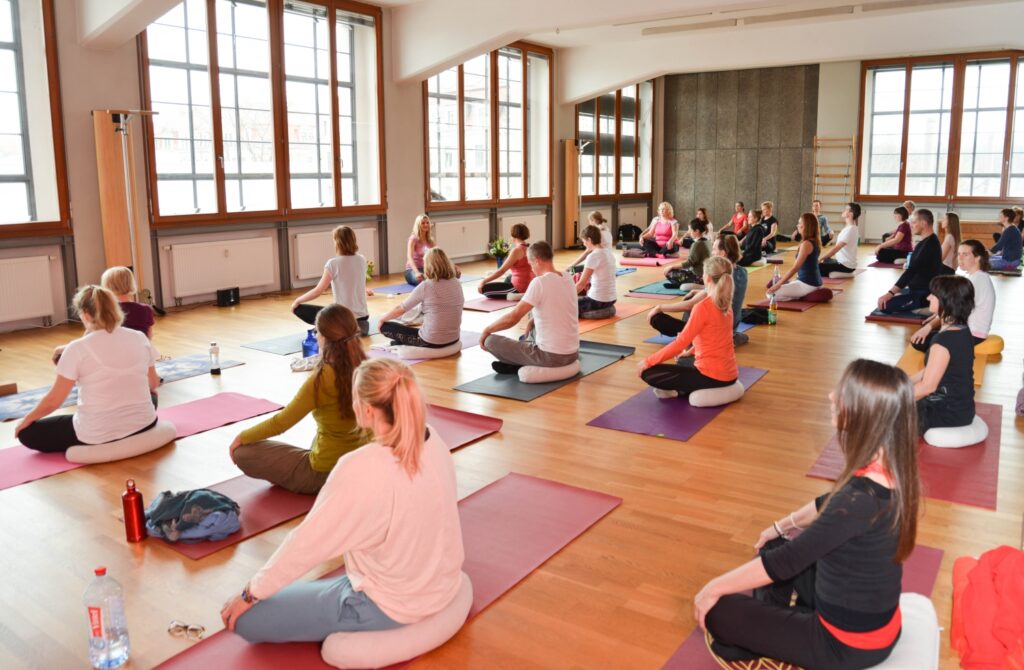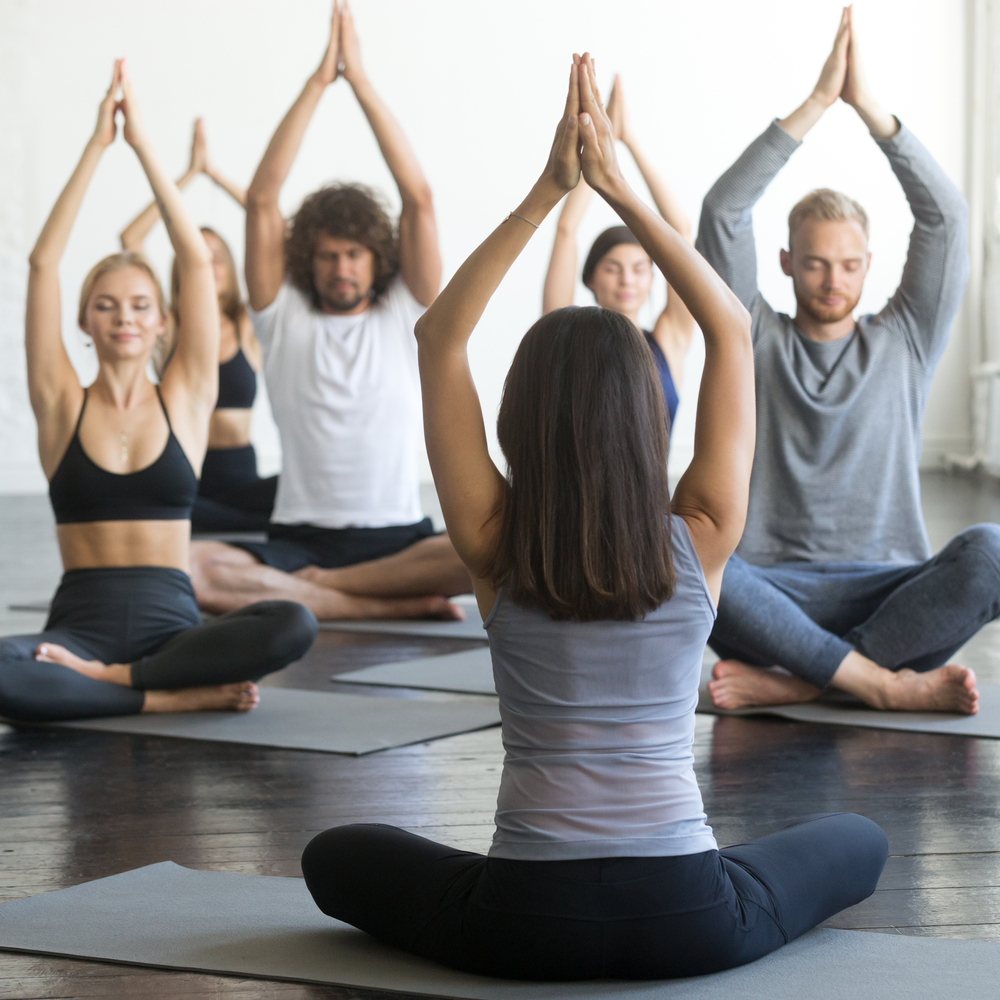
Yoga is one of the most versatile forms of exercise: it makes your body more flexible, strengthens your muscles, and calms your mind – all you really need is a yoga mat. It’s no wonder that more and more people want to learn yoga. But especially at the beginning, many questions arise: Which style of yoga suits me? Which yoga poses are good for beginners? And where can I find suitable classes nearby? This article answers all these questions so nothing stands in the way of your first successful yoga session.
What is Yoga – and why should you start?
Yoga is an ancient practice that originated in India and is much more than just exercise for many people. The exercises connect body, breath, and mind. Yoga is often practiced together with meditation. In today’s fast-paced world, yoga has proven to be an effective way to reduce stress, find balance, and gain flexibility. Many people also report that regular yoga improves sleep, relieves back pain, and boosts overall well-being. Sounds good? Now is the perfect time to start your yoga journey.
Who can practice yoga?
The short answer: everyone. Even the influential yoga teacher T.K.S. Krishnamacharya, often called the “father of modern yoga,” said: “As long as you can breathe, you can do yoga.” Yoga can easily be adapted to any body, age, or fitness level. Whether you’ve never exercised before, train daily, or have physical limitations, there are poses suitable for you as a beginner. You don’t need to perform the poses perfectly in your first class, and you shouldn’t compare yourself to others. Yoga is not a competition – it’s a way to reconnect with yourself and find calm.
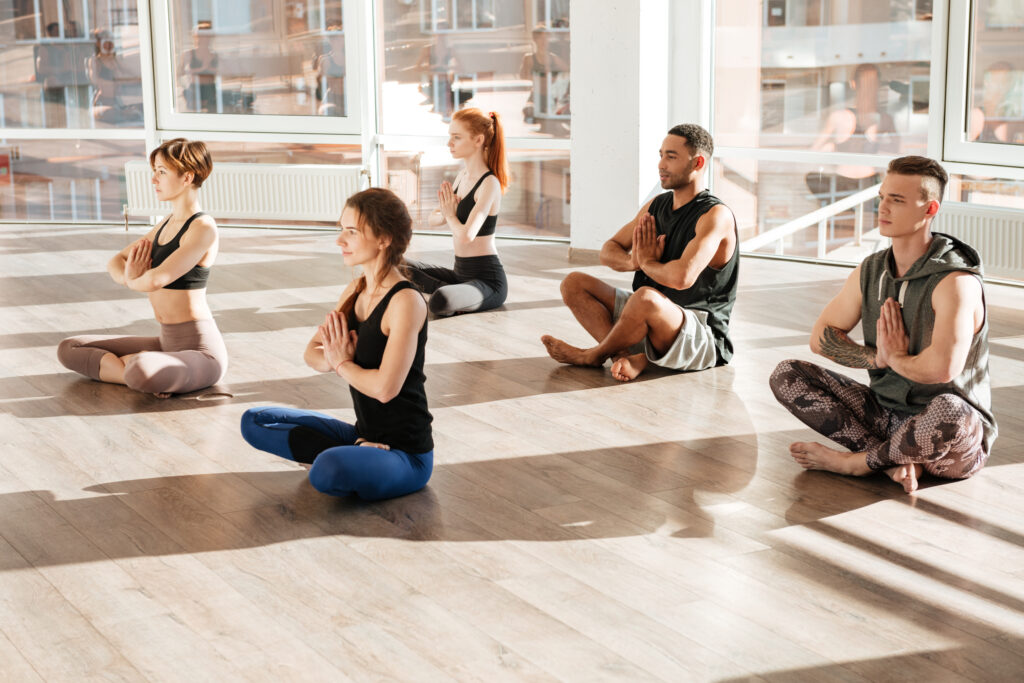
Which yoga styles are best for beginners?
With over 100 different styles of yoga, it can feel overwhelming at first. Here’s a quick overview of the most popular beginner-friendly styles:
Hatha Yoga
Hatha is the classic style for beginners. The poses are performed slowly and with control, with a strong focus on breathing technique and proper alignment. It’s ideal for building a solid foundation for your future yoga practice.
Yin Yoga
Yin yoga involves holding poses (asanas) for longer periods, often 2–5 minutes. This encourages deep stretching, relaxation, and mindfulness – perfect after a stressful day.
Vinyasa Yoga
Vinyasa links movement and breath in a flowing rhythm. It’s more dynamic than the two styles above and, with its stronger cardio component, also challenges your endurance. This can make it a bit more demanding for absolute beginners, so make sure the class is labeled as a beginner class or Level 1.
Restorative Yoga
Restorative Yoga is the gentlest of the styles mentioned here, using plenty of support from props like blocks, bolsters, or blankets. The focus is on complete relaxation of both body and mind. It’s perfect after intense workout days or whenever you’re feeling generally exhausted.
8 Beginner Yoga Poses You Should Know
These beginner yoga poses are not only relatively simple – they also form the foundation of any advanced yoga practice. You’ll come across them in almost every class, so it’s worth getting some initial experience with them.
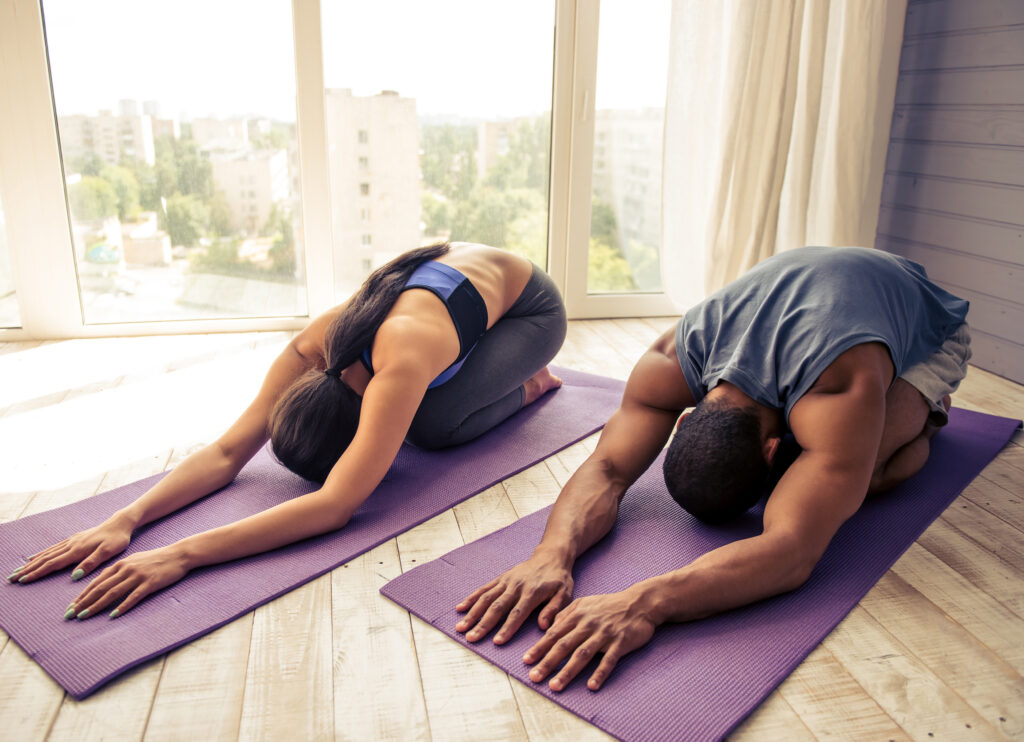
1. Child’s Pose (Balasana)
Kneel on the mat, sit back on your heels, lower your head to the floor, and stretch your arms forward. Child’s Pose is a resting position – it stretches the lower back, hips, and shoulders while helping you calm down. You can return to this pose anytime during your practice if you need a break.
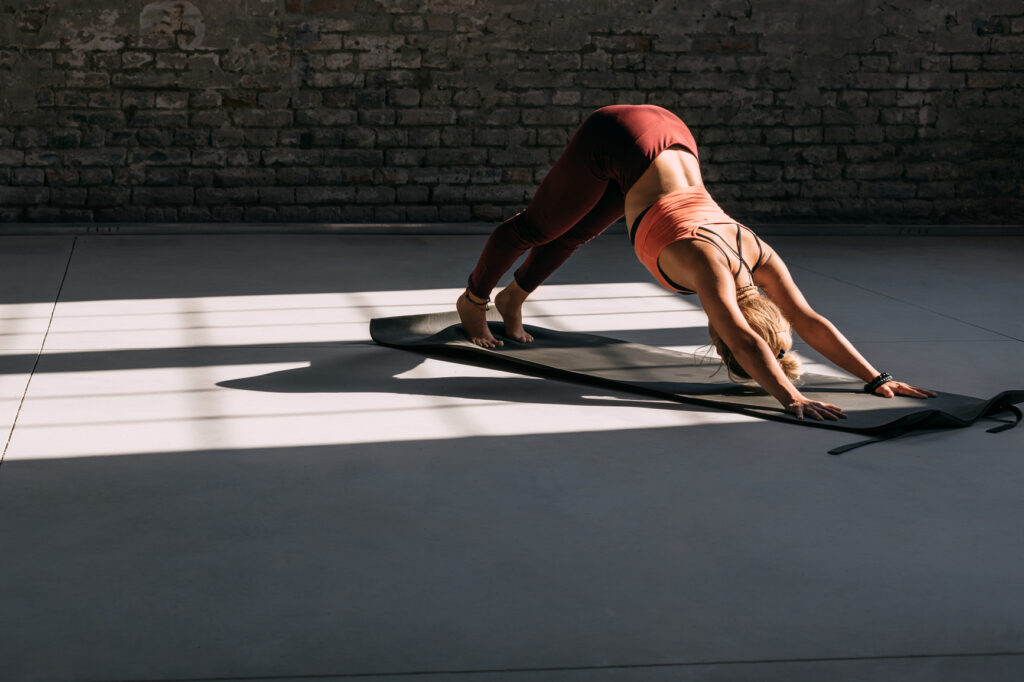
2. Downward-Facing Dog (Adho Mukha Svanasana)
Start on all fours, press your hands into the floor, lift your hips up, and fully extend your shoulders. This pose stretches the calves, hamstrings, and shoulders, while also strengthening the arms and core. Downward-Facing Dog is one of the most well-known yoga poses.
3. Mountain Pose (Tadasana)
Stand upright with your feet hip-width apart, arms relaxed at your sides. Gently engage your core, roll your shoulders back and down, and take a deep breath. Tadasana may look simple, but it activates numerous muscles throughout the body. Mountain Pose serves as the foundation for many other exercises.
4. Warrior I (Virabhadrasana I)
The Warrior poses are also classic yoga exercises and appear in almost every flow. For Warrior I, step one leg forward from a standing position, bend the front knee to 90 degrees, and lift your arms straight overhead. This power pose strengthens the legs, glutes, and core while opening the hips and chest.
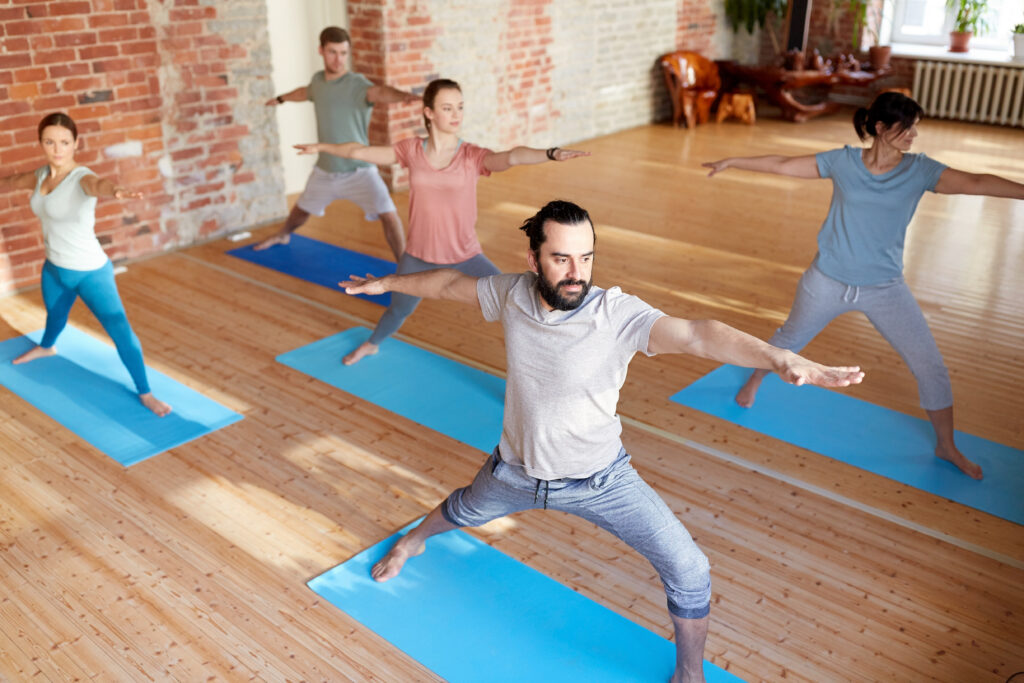
5. Warrior II (Virabhadrasana II)
For this variation, extend your arms out to the sides and gaze over your front middle finger. Your hips open to the side. Warrior II builds endurance, balance, and overall body stability.
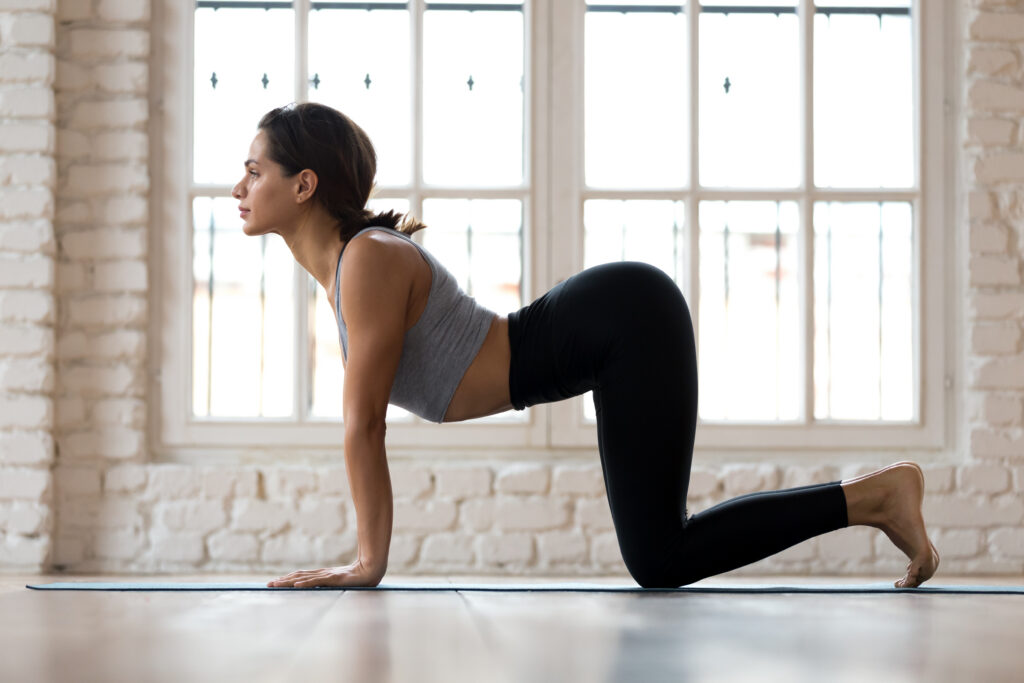
6. Cat-Cow (Marjaryasana-Bitilasana)
From a tabletop position, flow between a rounded spine (Cat) and an arched spine (Cow), coordinating the movement with your breath. This gentle sequence mobilizes the spine, releases tension in the back, and is perfect for warming up.
7. Bridge Pose (Setu Bandha Sarvangasana)
Lie on your back with your feet hip-width apart and lift your hips upward. Keep your arms extended alongside your body. This pose strengthens the glutes, thighs, and back while opening the chest and hip flexors – especially beneficial if you spend a lot of time sitting.
8. Corpse Pose (Savasana)
Savasana is the final relaxation pose: lie flat on your back, arms and legs slightly apart, eyes closed. As simple as it sounds, it’s essential. This pose allows your body to absorb the benefits of your practice and helps you find deep rest. Often paired with meditation, Savasana lets you fully arrive in your body and mind.
Yoga Gear for Beginners: What Do You Really Need?
You don’t need much to get started with yoga – which is one of the reasons it’s so accessible for everyone, anywhere. Most yoga studios provide mats, blocks, and any other essentials you might need. So you don’t have to invest right away to start your practice.
Yoga Mat: Your mat is the most important piece of equipment. Make sure it’s non-slip and well-padded. For beginners, mats between 4–6 mm thick are ideal.
Yoga Block: Yoga blocks help you reach positions that aren’t fully accessible yet – like if you can’t quite touch the floor in a forward fold. Not mandatory, but very useful, especially for stretches and balance poses.
Yoga Strap: The yoga strap is optional but helpful. It assists with stretches when flexibility is limited – for example, holding your feet in seated forward folds.
Comfortable Clothing: You don’t need special yoga clothing. The key is freedom of movement – comfortable leggings or pants and a fitted top that won’t slip over your head are perfect.
Bolster: Optional, but great for Yin or Restorative yoga to support poses. For beginners, a regular pillow works just fine.
Blanket: Many yogis use a blanket during the final relaxation pose to stay warm. A blanket can also be used during practice similarly to a bolster.
Learning Yoga: Studio Classes or Online?
One of the first questions you’ll ask yourself is: Where is the best place to learn yoga? There are several options to choose from:
Yoga Studio Classes
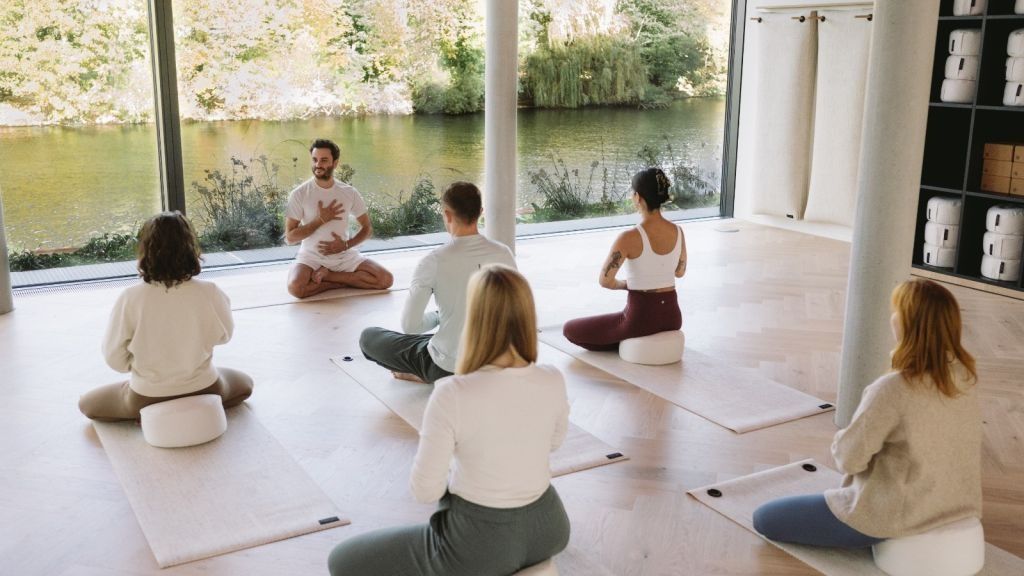
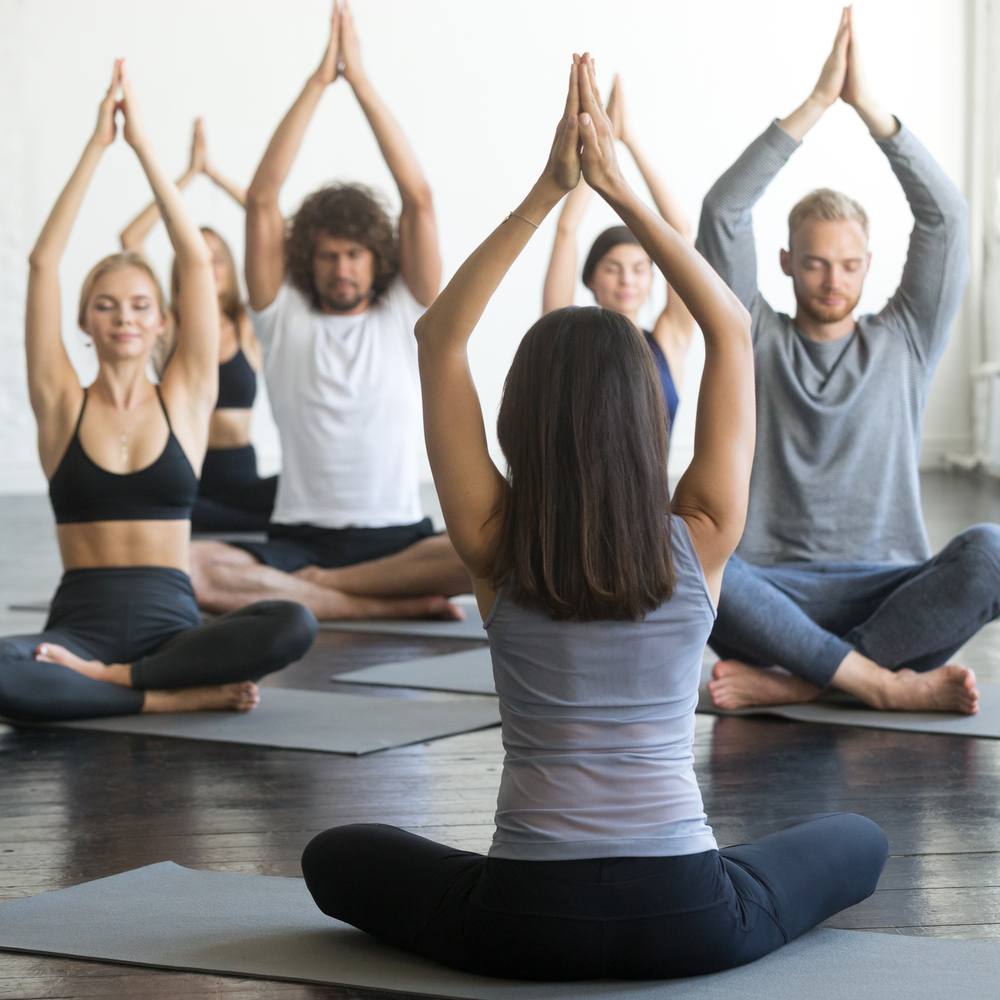
Attending a beginner’s class at a studio is the most effective way to learn yoga. A qualified yoga teacher can correct your poses in real time, adapt exercises to your body, and offer variations. You also benefit from the group energy and the studio atmosphere. With Urban Sports Club, you can find a variety of suitable yoga studios near you.
Live Online Classes and Videos
Online yoga has grown enormously in recent years. Through Urban Sports Club, you can book live online classes or access on-demand videos. There are also many free yoga videos available on other platforms like YouTube. The advantage? You have full flexibility and can practice anywhere, anytime.
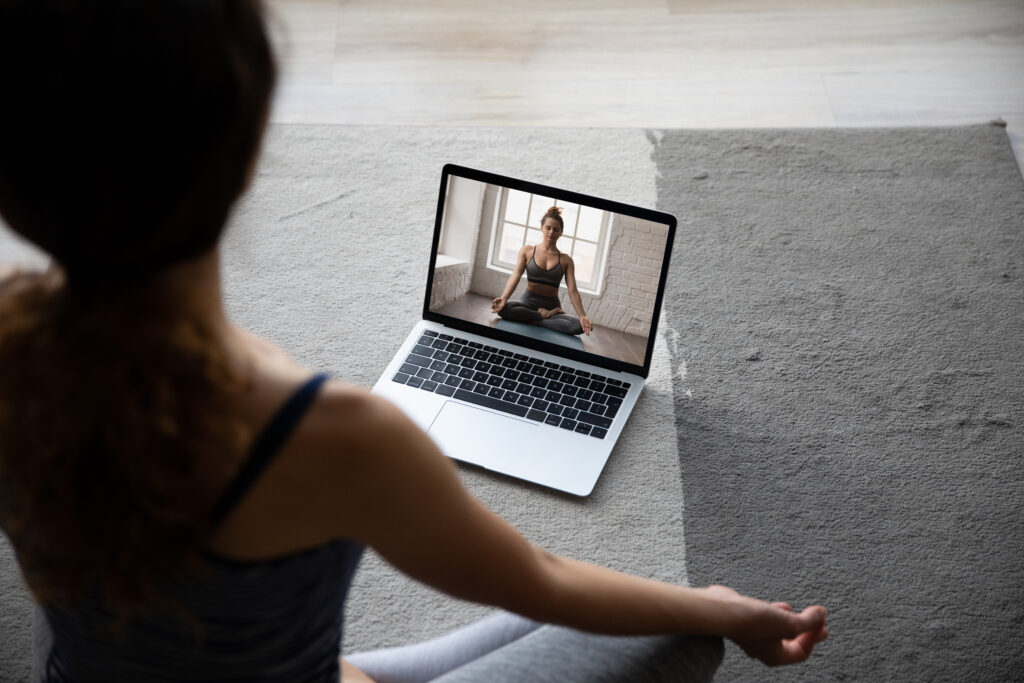
The ideal combination for beginner yoga: Start with a studio class to learn the basics correctly, and complement your practice at home or on the go with online videos.
10 Tips for Your First Yoga Class
You’re about to attend your first yoga class? Here are some tips to help you start relaxed and well-prepared:
- Let the instructor know: Before class begins, tell your teacher that you’re a beginner. This way, they can pay extra attention and guide you appropriately.
- Arrive a bit early: Give yourself an extra 10 minutes to settle in, prepare your mat and any props, and get familiar with the studio.
- Avoid eating right before class: Ideally, your last large meal should be at least two hours earlier so you don’t feel sluggish and can move freely.
- Shoes off: Yoga is practiced barefoot, which gives you better grip and body awareness on the mat.
- Mute your phone: Yoga is about presence. Treat this time as your personal space without distractions.
- Breathe consciously: Your breath is the most important tool in yoga. It guides your practice and is often cued by the instructor.
- Listen to your body: Pain is not something to push through. If something hurts, exit the pose or choose a gentler variation.
- Don’t compare yourself: Everyone on the mat has their own story and practice. Especially as a beginner, avoid comparing yourself to others.
- Use props: Blocks and straps aren’t a sign of weakness – they help you perform poses safely and correctly, supporting your progress.
- Stick with it: Yoga’s benefits unfold through regular practice. Two to three sessions per week are ideal for seeing progress quickly.
Yoga for Beginners: Getting Started Made Easy – with Urban Sports Club
With Urban Sports Club, you have access to hundreds of yoga studios and classes across Germany – from Hatha Yoga and Yin Yoga to Vinyasa Yoga. Whether you prefer learning in a studio with an experienced instructor or diving into your practice online, Urban Sports Club’s partner studios offer a huge variety. Want to know the best yoga studios in your city? In our articles, we’ve rounded up some top partner studios in Hamburg, Munich, Berlin, Stuttgart, Düsseldorf, Frankfurt, and Cologne. Try out different studios, yoga styles, and instructors to discover what works best for you.
Why do you want to start practicing yoga, and what tips help you stay consistent? Share your experience with us so other beginners can benefit – because yoga thrives on community and the sense of connection. Enjoy your journey toward greater mindfulness, body awareness, and wellbeing.
Frequently Asked Questions About Yoga for Beginners
How often should I practice yoga as a beginner?
For noticeable progress, 2–3 sessions per week are recommended. Even 20–30 minutes of daily practice can make a visible difference after just a few weeks – more flexibility, less tension, better sleep. More important than intensity is consistency, especially for beginners. It’s better to do two shorter sessions per week than one very intense session every two weeks that leaves you sore.
Do I need to be flexible to practice yoga?
No – flexibility is not a requirement, but rather a result of practicing yoga. Especially if your body feels stiff, yoga can have a big impact. You start at your own level and gradually become more flexible over time.
Which style of yoga is best for beginners?
Hatha Yoga is especially well-suited for beginners – slow, structured flows with a focus on correct alignment and breathing techniques. Yin Yoga is also ideal for those starting out who are mainly looking for relaxation and gentle stretching. Vinyasa is a bit more dynamic and requires some basic body awareness, but with a good instructor, it can be learned effectively as well.
Can I also learn yoga alone at home?
Basically, you can also learn yoga at home – with online classes through Urban Sports Club, YouTube videos, or specialized yoga apps like Asana Rebel or YogaEasy. However, especially at the beginning, we recommend attending a few classes in a studio with a qualified instructor so you learn the basic poses correctly and avoid strain from practicing alone at home. Once you’ve gained this initial experience, you can continue your practice independently at home or on the go. Yoga, however, thrives on a sense of community, so practicing in a group is often more enjoyable for many yogis.
How long does a yoga session usually last?
A yoga class usually lasts between 60 and 90 minutes. There are also shorter formats – 30-minute morning flows or 45-minute lunch break sessions are common and help you fit yoga and meditation into your (work)day on a regular basis.
What is the difference between yoga and Pilates?
Both disciplines improve flexibility, posture, and body awareness – but they have different focuses. Yoga has spiritual and meditative roots, incorporating breathwork and meditation into the practice. Pilates, developed in the 20th century, focuses more on targeted strengthening of the deep muscles. With Urban Sports Club, you can easily try both and decide which – yoga or Pilates – best suits your needs.